Can You Pass SQE1 If You Are Not Good with Numbers?
Share
It is a common trope that law students and graduates are not comfortable with numbers. For many of them, the fear of numbers is one of the most persistent sources of anxiety when preparing for SQE1. Whether it is the thought of calculating tax liabilities, working through accounting entries, or deciphering the SRA Accounts Rules, the numerical elements of the exam can feel like a wall that is impossible to climb. The reassuring truth, however, is that SQE1 is fundamentally a test of functioning legal knowledge and reasoning. The numerical content is far smaller than most candidates fear.
Just How Many Number-Heavy Questions Are There?
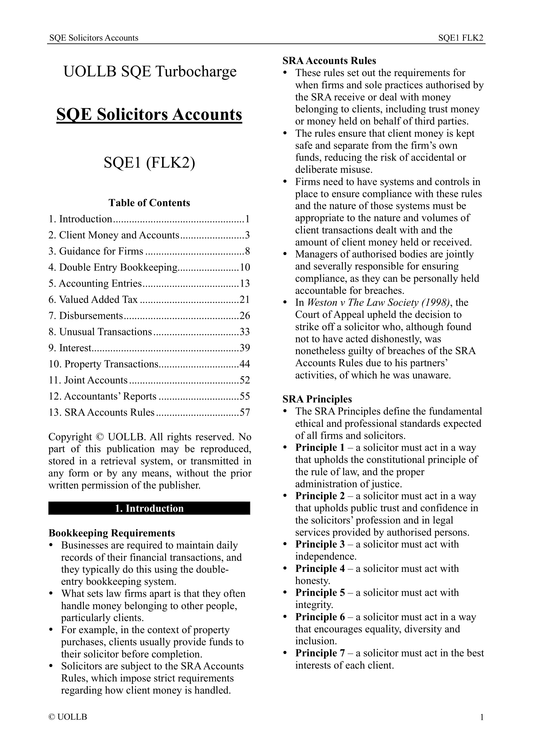
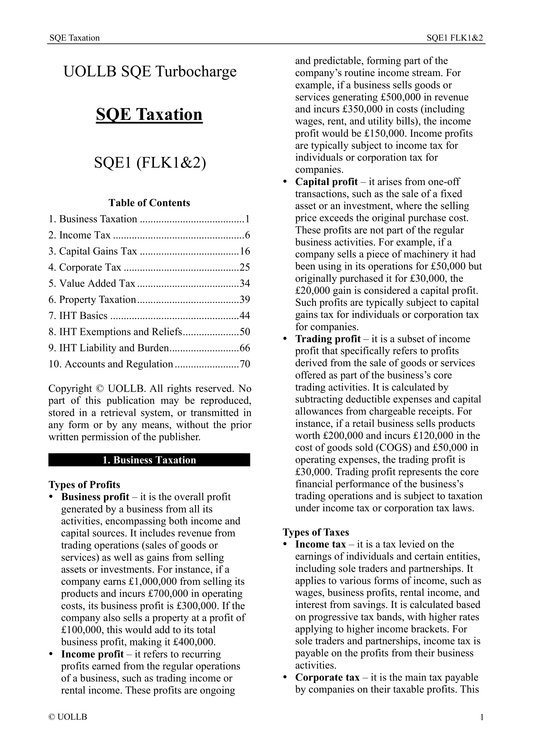
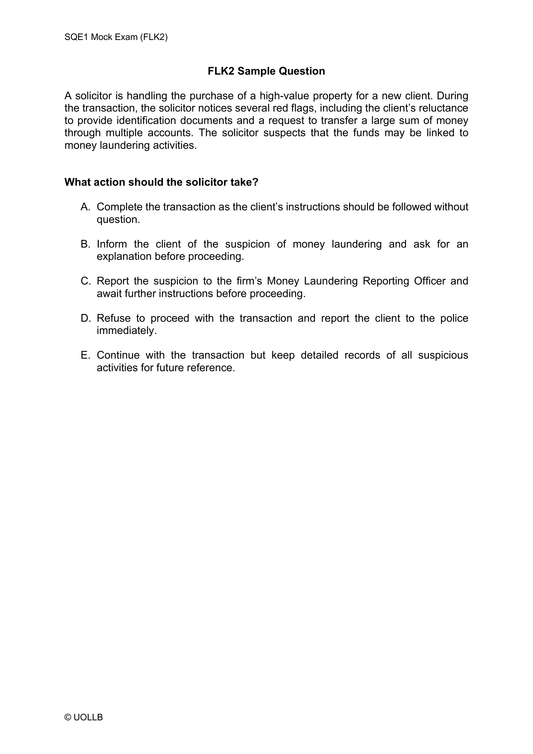
To understand the scale of the challenge, it helps to look at the actual distribution of numerical questions across both sittings. In FLK1, taxation is covered within Business Law and Practice, which accounts for 24 to 34 questions in total. Within that section, 4 taxation topics appear, including Income Tax, Corporation Tax, Capital Gains Tax, and Value Added Tax. In practice, this translates to an estimated 4 to 6 taxation questions across the entire FLK1 paper of 170 questions. In FLK2, taxation arises in both Property Practice and Wills and the Administration of Estates, covering Stamp Duty Land Tax, Capital Gains Tax, Value Added Tax, and Inheritance Tax. The estimated total for FLK2 is 4 to 6 taxation questions. On top of this, Solicitors Accounts questions appear exclusively in FLK2, with an estimated 10 questions in total, of which only around 5 are expected to involve actual accounting calculations, with the remainder being conceptual or ethics-based questions requiring no arithmetic at all. Adding this up across both papers, you will likely face somewhere in the region of 13 to 17 questions that touch on numerical subjects. Of those, only a fraction require genuine calculation. In an exam comprising 340 questions, this is a relatively small slice of the overall assessment, roughly 4% to 5% of the total marks.
The Passing Threshold Works in Your Favour
The historical pass marks provide further comfort. Based on past statistics, you need to answer approximately around 94 to 97 questions correctly out of 170 to pass each paper, equating to roughly 55 to 57 percent. This built-in margin means that even if you skip every single taxation question in FLK1, you can still pass that paper comfortably, provided you perform solidly elsewhere. The same logic applies in FLK2. Skipping all taxation questions still leaves you needing to answer around 94 to 97 of the remaining questions correctly, which remains an achievable target. Even if you go further and skip all Solicitors Accounts questions too, you will still only need to answer approximately 94 to 97 of the remaining 170 questions in FLK2 to pass. The pass threshold is not so narrow that a weakness in numerical topics will automatically cost you your qualification. Strategic strength across the other subjects can absorb these gaps.
Not All Numerical Questions Actually Require Calculation
One of the most important distinctions for candidates who struggle with numbers is between questions that involve numerical topics and questions that actually require arithmetic. Many topics that sound intimidating are, in practice, largely rule-based and conceptual. Questions on client money, the SRA Accounts Rules, accountants' reports, and accounting records are frequently ethical or procedural in nature rather than mathematical. Similarly, questions on Inheritance Tax thresholds or VAT registration may test whether you know the applicable rule rather than whether you can perform a calculation. If you focus your preparation on understanding these conceptual dimensions, you can harvest a significant number of marks from ostensibly numerical subjects without working through a single sum. In Solicitors Accounts, this approach could allow you to answer around half of the available questions while setting aside only the remaining half that involve actual accounting operations.
Should You Skip or Should You Engage?
While it is mathematically possible to skip all numerical questions and still pass SQE1, the smarter approach for you is selective engagement rather than wholesale avoidance. Taxation questions are widely regarded as relatively rule-based and predictable. Once you understand how a particular tax operates at a structural level, including what triggers it, what the key exemptions are, and how it interacts with a given transaction, many questions become straightforward to answer correctly without requiring precise calculation. The same is true of Solicitors Accounts. The SRA Accounts Rules are detailed but logical, and once you understand when money must be held in a client account, how withdrawals operate, and what the billing rules require, you are well-placed to answer a large proportion of questions in this area reliably. This predictability is actually one of the strongest arguments for investing some time in these subjects, even if numbers are not your strength. In more discursive areas of law, such as tort, contract, or equity, question difficulty can vary significantly depending on how a scenario is framed. Numerical and rule-based topics tend to reward preparation more directly, meaning that the marks you gain are less likely to slip away under exam pressure.
A Practical Strategy for Number-Averse Candidates
If you are genuinely uncomfortable with numbers, a sensible approach is to work through the following steps. First, identify which questions in the numerical subjects are conceptual rather than computational, and prioritise those in your revision. Second, spend time understanding the structural rules of each taxation topic and the SRA Accounts Rules at a framework level, even if you do not attempt to master every calculation. Third, use past questions and practice materials to build familiarity with how these topics are tested, so that the format feels less alien on exam day. Fourth, concentrate the bulk of your preparation time on the non-numerical subjects across both papers, where there are far more marks available and where strong performance can compensate for any gaps in the numerical areas. SQE1 rewards strategy as much as knowledge. If numbers are not your strength, that is a challenge you can manage, not a reason to doubt your ability to pass.