MPRE Testing Format

The MPRE is administered as a computer-based examination at Pearson VUE testing centers. The test session lasts two hours and consists of multiple-choice questions. You answer the questions on a computer, and the exam automatically ends when the two-hour testing period expires. Because the exam is computer-based, you must complete a brief tutorial before beginning the test to become familiar with the testing interface.

The exam contains a total of 60 multiple-choice questions. However, only 50 of these questions are scored. The remaining 10 questions are unscored pretest questions that the examiners use to evaluate potential questions for future examinations. These experimental questions are randomly distributed throughout the exam and are indistinguishable from the scored questions. Therefore, you should answer every question carefully because you will not know which questions count toward your score.

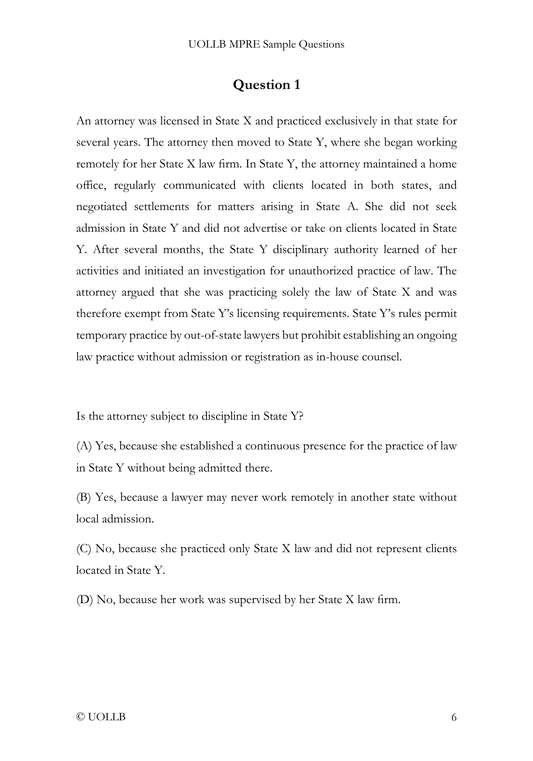
Each question on the MPRE is followed by four possible answer choices. You must select the best answer from the four alternatives provided. The questions typically present short fact patterns involving ethical issues that lawyers may encounter in practice, such as conflicts of interest, confidentiality, advertising, or duties to clients and the court. Your task is to identify the correct application of the relevant professional responsibility rule.

The MPRE uses a scaled scoring system. There is no penalty for incorrect answers. You receive credit only for correct responses, and points are not deducted for wrong answers. Although you answer 50 scored questions, the raw score is converted into a scaled score to ensure fairness across different versions of the exam. Scaled scores range from 50 to 150, with the national median typically around 100. Each jurisdiction that requires the MPRE sets its own minimum passing score.
Back to blog

Join candidates from Legal 500 firms, top universities and international organisations who trust UOLLB

Council of Europe
Crown Prosecution Service
Ministry of Defence
Baker Mckenzie
Linklaters
Atsumi & Sakai
Yale University
University of Chicago
Columbia University
New York University
University of Michigan
INSEAD
University of London
University College London (UCL)
London School of Economics (LSE)
King’s College London (KCL)
Royal Holloway, University of London 
Birkbeck, University of London
SOAS, University of London
University of Manchester
University of Zurich
University of York
Brandeis University
University of Exeter
University of Sheffield
Boston University
University of Washington
University of Leeds
University of Law
University of Kent
University of Hull
Queen’s University Belfast
Arizona State University
McGill University
Toronto Metropolitan University
University of Hong Kong (HKU)
Hong Kong University of Science and Technology (HKUST)
University of Buckingham
Robert Gordon University
ESSEC Business School
University of Puerto Rico

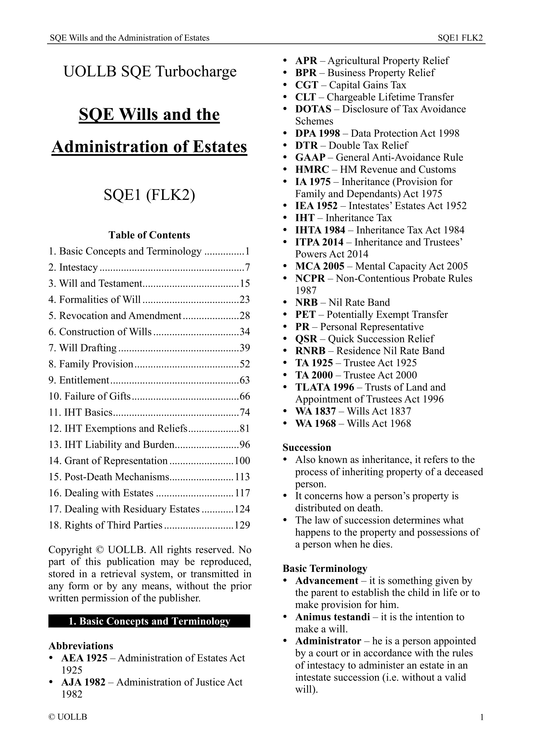
  • SQE Wills and the Administration of Estates

    Diagrams and Flowcharts

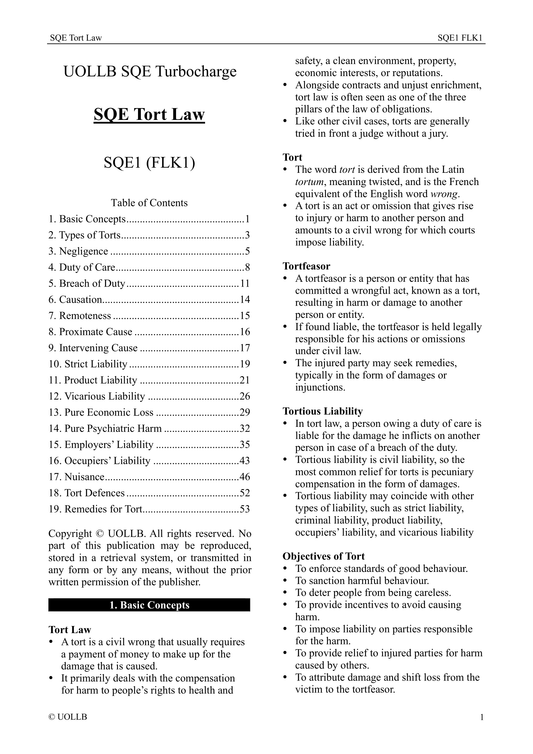
    Our carefully designed diagrams and flowcharts will guide you through complex legal issues.

  • SQE Dispute Resolution

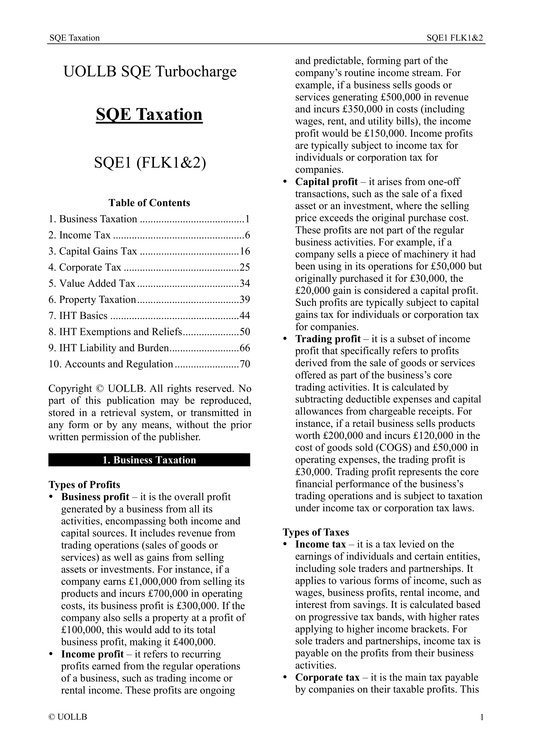
    Digestible Bullet Points

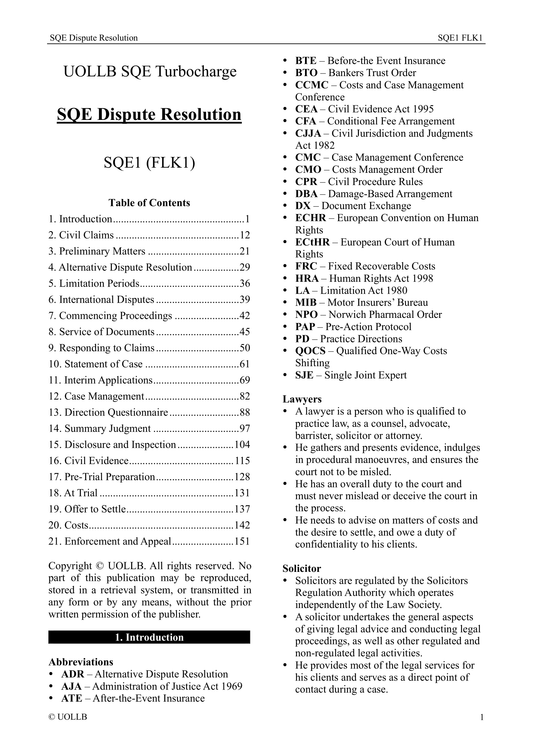
    Legal concepts are explained in clear, easy-to-follow bullet points.

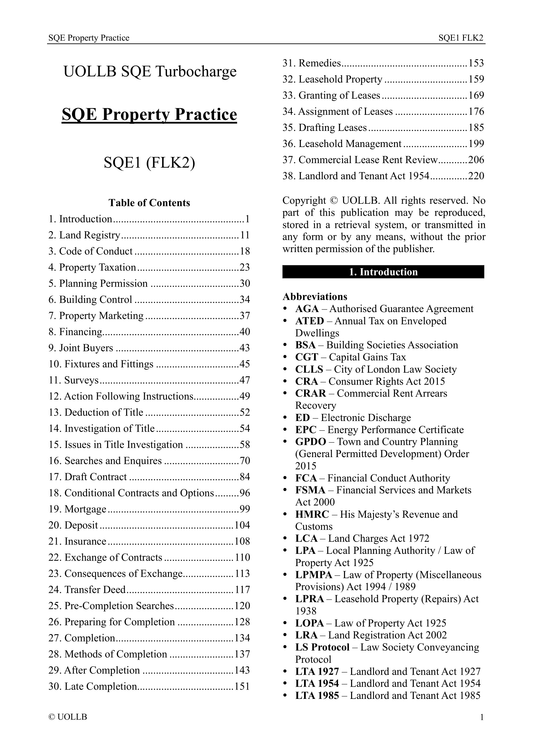
  • SQE Property Practice

    Clear and Succinct Definitions

    Key concepts are concisely defined to help you understand legal topics quickly.

  • SQE Wills and the Administration of Estates

    Statutory Provisions

    Statutory provisions are provided side by side with legal concepts to help you swiftly locate the relevant legislation.

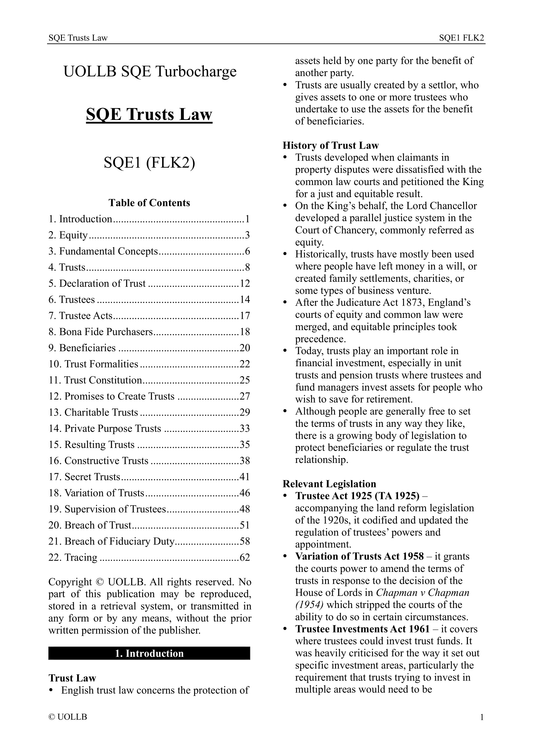
  • SQE Trusts Law

    Rules and Exceptions

    Rules and exceptions are clearly listed so that you know when a rule applies and when it doesn't.

  • SQE Land Law

    Terminology

    Legal terms and key concepts are explained at the beginning of each chapter to help you learn efficiently.

  • SQE Dispute Resolution

    Structured Illustrations

    Complex legal procedures are explained and visualised step by step with flowcharts.

  • SQE1 Sample Question

    Practice Questions

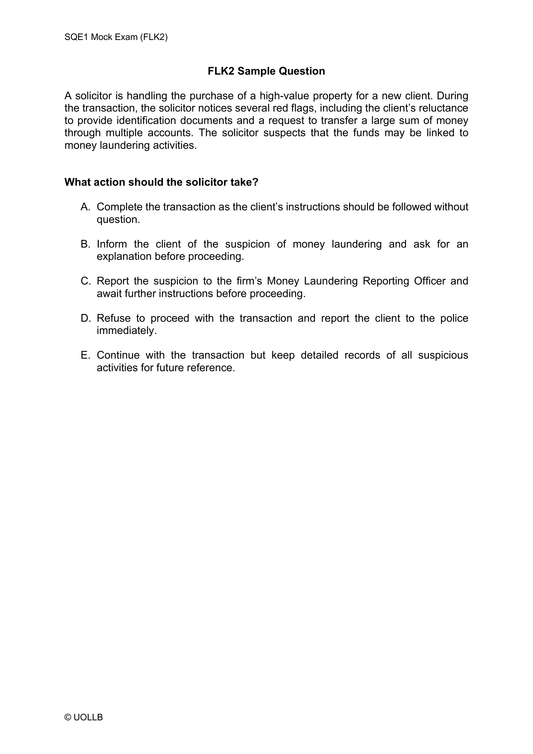
    SQE1-style questions are provided to help you become familiar with the exam format.

  • SQE1 Sample Question

    Detailed Explanations

    Practice questions are explained in detail so that you know how to select the best answer out of the five plausible options.

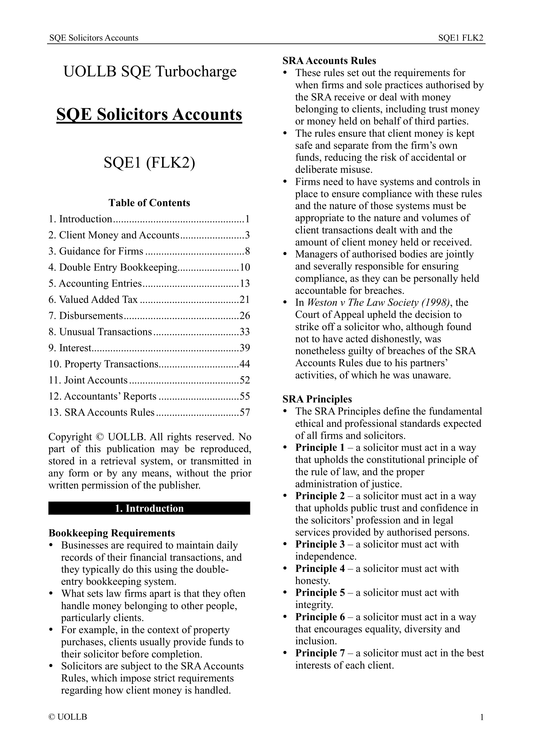
  • SQE Solicitors Accounts

    Real-World Scenarios

    Real-world scenarios are provided to help you understand how legal concepts, rules, and regulations are applied in practice.

  • SQE Ethics and Professional Practice

    Ethical Considerations

    Solicitors' ethics and professional conduct are presented in concise, digestible bullet points.

  • SQE Wills and the Administration of Estates

    Legal Principles and Concepts

    Legal principles and concepts are broken down into clear, concise explanations, making them easier to understand and apply.