Why is the SQE so expensive?
Share
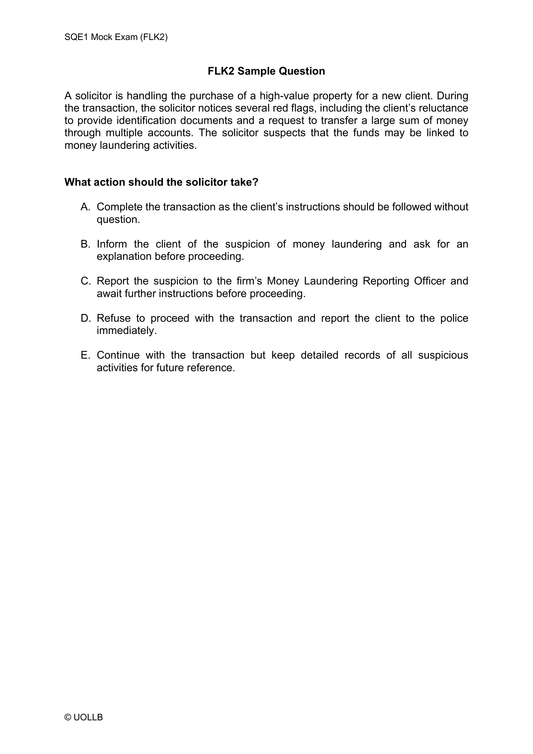
The SQE is expensive mainly because it is a professional qualification monopolistically administered by Kaplan, which is a for-profit international education company. The fees reflect the cost of setting and running the assessment, including question development, exam security, test centres, marking, administration and regulation by the SRA. We believe factors contributing to the high cost of the examination include the following 7 issues:
1. The SRA charges substantial assessment fees. The SQE is administered through the SRA's assessment system and its assessment provider Kaplan, rather than by individual universities. Candidates therefore pay directly for the professional assessment.
2. The exams are expensive to develop and maintain. SQE1 contains 340 multiple-choice questions taken over two separate days, and SQE2 assesses practical legal skills through written and oral assessments spanning five assessment days. Developing, reviewing, standardising, maintaining, and grading these assessments requires significant professional and administrative resources.
3. SQE2 is particularly costly to administer. Unlike a conventional written university examination, SQE2 involves practical assessments such as client interviewing, advocacy, legal research, legal writing and drafting, requiring legally qualified assessors, examination facilities and standardised marking procedures.
4. There are substantial security and logistical costs. The SQE is a national qualification taken across different locations, assessment centres, and test dates. Strict identity checks, secure examination materials, multiple question sets, invigilation, specialised technology, and malpractice prevention all contribute significantly to its high operational cost.
5. The SQE is intended to be a professional licensing assessment. The purpose is not simply to test whether someone has completed a law degree. It is designed to establish that candidates meet a common minimum standard for qualification as a day-one solicitor in England and Wales, regardless of where or how they studied.
6. The SQE fee is only part of the total cost. Candidates also commonly pay for preparation courses, textbooks, revision materials and potentially qualifying work experience. Consequently, the overall cost of qualifying as a solicitor can be considerably higher than the examination fees themselves.
7. Inflation and rising operating costs. The cost of administering the SQE has been affected by rampant inflation in recent years, including increases in staff salaries, examination facilities, technology, security, assessment administration and other operational expenses; these rising costs can contribute to increases in examination fees over time.
The particularly controversial point
The criticism is that the SQE was introduced partly to make the route to qualification more flexible and potentially cheaper, but the examination fees themselves are still significant.
Recently, the SRA has implemented further fee increases as follows:
| SQE (from September 2026) | Fee |
|---|---|
| SQE1 | £2,006 |
| SQE2 | £3,086 |
| SQE1 + SQE2 | £5,092 |
| Resit SQE1 FLK1 | £1,003 |
| Resit SQE1 FLK2 | £1,003 |
| Resit SQE2 | £3,086 |
| First Stage Appeal | £350 |
| Final Stage Appeal | £850 |
So a candidate who passes both exams on the first attempt is already paying over £5,000 just for the assessments, before paying for preparation courses or other qualification costs.
The key distinction is therefore:
The SQE can make the route to becoming a solicitor more flexible and potentially cheaper, but that does not mean the examinations themselves are cheap.
There is also an important policy question behind this. If the SQE is supposed to widen access to the profession, are fees of more than £5,000 for the two assessments consistent with that objective? That is a particularly interesting issue to be justified by the SRA.