Path to United States Bar Admission
Share
Your journey toward becoming a licensed attorney begins long before you take the bar exam. Familiarizing yourself with the bar admissions process early will help you stay organized, meet critical deadlines, and approach each stage of your legal education with confidence. This roadmap outlines what to focus on during each year of law school and immediately after graduation. Because bar admission rules vary by jurisdiction and may change over time, always consult your jurisdiction’s bar admission agency for the most current information. You can also seek personalized guidance from your law school’s academic support and bar success professionals.
1L Year
Begin by researching the admission requirements for the jurisdiction(s) where you plan to practice law. Some jurisdictions require documentation or registration before your 3L year, so it is important to start early.
Create your NCBE Account through the NCBE website. This account will be your central hub for registering for exams, managing character and fitness forms, and tracking your bar application progress.
As you plan your 2L course schedule, keep bar exam subjects in mind. Seek advice from your academic advisor to ensure your coursework aligns with bar-tested topics.
Start thinking about your post-graduation bar study plan, including how you will finance your bar preparation and what bar prep programs or school-supported options are available to you.
Review the character and fitness section of your law school application, using NCBE’s sample application as a reference. Make sure the information you provided is accurate and up to date. If you have concerns about past conduct, financial issues, or other matters that might raise questions during the character and fitness review, seek confidential guidance from your school’s bar success office early on. Proactive disclosure and consistency are key to avoiding issues later.
2L Year
Stay engaged with your law school’s bar success office and attend workshops or information sessions about the bar application process. Many schools and state bars also offer mentorship programs that connect students with practicing attorneys who can share insights about the bar journey.
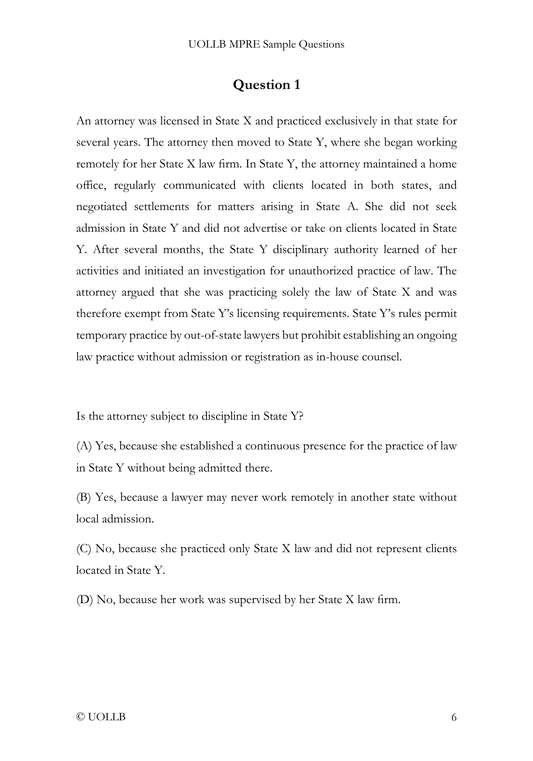
Continue selecting courses that align with bar exam content areas. Plan to take the Multistate Professional Responsibility Examination (MPRE) during or soon after your professional responsibility course. This test is required for admission in nearly all jurisdictions. By mid-year, research and choose your bar prep program, and sign up for any school-sponsored bar review courses if available.
Update your character and fitness disclosures as needed. Begin gathering documentation you will need for your jurisdiction’s application, including past addresses, employment history, financial records, and any legal or disciplinary information. Collecting these early can save significant time during your 3L year.
3L Year
Confirm all deadlines, fees, and policies for your chosen jurisdiction. Many jurisdictions have strict and early filing dates for both the bar exam and character and fitness applications. Submit your application for admission, noting that some jurisdictions separate the exam application from the character and fitness portion. Make sure that your NCBE Account contact information remains current, especially your email and mailing address. Use a permanent, non-.edu email address to avoid missing critical communications after graduation.
Sign up for NCBE’s monthly NextGen UBE updates to stay informed about exam developments and registration details. Monitor your email and NCBE Account regularly for registration instructions and jurisdiction-specific announcements.
Continue reviewing and updating your disclosures to ensure they are complete and consistent. Submit your character and fitness application according to your jurisdiction’s timeline. If you are unsure whether to disclose an issue, seek advice from your school’s bar success office before submission. Full transparency is essential to maintaining your credibility during the review process.
Post-Graduation
After graduation, continue monitoring your jurisdiction’s bar admission website and emails for updates, deadlines, and additional requirements. Make sure that your NCBE Account information (email and mailing address) is up to date. Verify that your MPRE score and all other necessary documentation have been sent to your jurisdiction.
Prepare diligently for the bar exam by following your bar prep program’s schedule and utilizing resources offered by your law school. Keep checking your NCBE Account and email for vital details about your exam site, technology requirements, and test-day policies.
Expect communication from NCBE investigators or your jurisdiction’s character and fitness committee after submission. Respond promptly to any requests for clarification or additional information. If any of your personal or professional circumstances change, such as address, employment, or financial status, update your application immediately to maintain accuracy.
Post-Bar Exam
After completing the bar exam, your focus turns to final administrative and follow-up steps. Begin by verifying that your NCBE Account contains your permanent email address to ensure you continue receiving all official communications, particularly as your school email may soon expire. If you are considering licensure in additional jurisdictions, review the UBE transfer policies available on the NCBE website. Understanding these options can help you expand your professional reach without needing to retake the bar exam.
Stay alert for score release information from your jurisdiction and monitor your NCBE Account for official updates. Once results are available, confirm that you have satisfied all jurisdiction-specific requirements, which may include completion of the MPRE, state law components, or other post-exam conditions necessary for admission. Completing these promptly ensures a smoother transition to licensure.
During this period, continue monitoring communications from NCBE and your jurisdiction’s investigators regarding your character and fitness application. Prompt responses are essential to avoid delays. You must keep your character and fitness application current until your admission is finalized. Update it immediately if any relevant personal, professional, or legal information changes. Accuracy and transparency remain crucial throughout this stage of the process.
Post-Admission
Once your application for admission is approved and you are formally sworn in, you can officially call yourself a lawyer. This milestone marks the beginning of your professional journey in the legal field. As a licensed attorney, you now assume the responsibilities of maintaining ethical standards, complying with continuing legal education requirements, and adhering to your jurisdiction’s Rules of Professional Conduct.