MPRE Study Tips
Share
Mastering the MPRE requires an approach that blends substantive understanding of professional-responsibility doctrine with disciplined practice in applying rules to nuanced fact patterns. The exam is not simply a test of memorization; it evaluates judgment, precision, and the ability to identify ethically significant details in scenarios that often mirror real-world practice. Effective preparation begins with recognizing that the MPRE is governed primarily by the ABA Model Rules of Professional Conduct and the ABA Model Code of Judicial Conduct, not by jurisdiction-specific rules. Therefore, a successful study strategy focuses on internalizing the structure, logic, and policy underpinnings of these model rules rather than mastering isolated provisions. Students should learn not only what the rules say but why the rules exist, because the exam frequently tests reasoning built into the ethical framework, such as protecting client autonomy, ensuring fairness in the justice system, and maintaining the integrity of the profession.
A key part of successful preparation is developing the ability to read fact patterns carefully and identify the ethical “trigger” embedded in the question. MPRE items almost always revolve around a specific rule, such as conflicts of interest, confidentiality, candor to the tribunal, safekeeping property, and the fact patterns are constructed to test whether the examinee can distinguish among overlapping duties. Because the scenarios often contain excess narrative information, the challenge is to identify the legally significant facts and discard the irrelevant ones. For example, the relationship between parties, the timing of disclosures, the nature of the client’s conduct, and the presence or absence of informed consent each play critical roles in determining whether a rule has been violated. Developing a habit of reading slowly, outlining the facts mentally, and pinpointing the central ethical issue significantly increases accuracy across the exam.
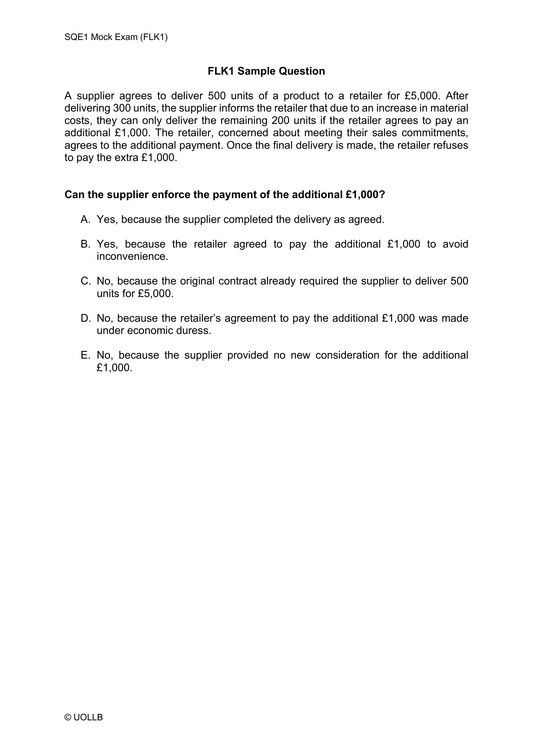
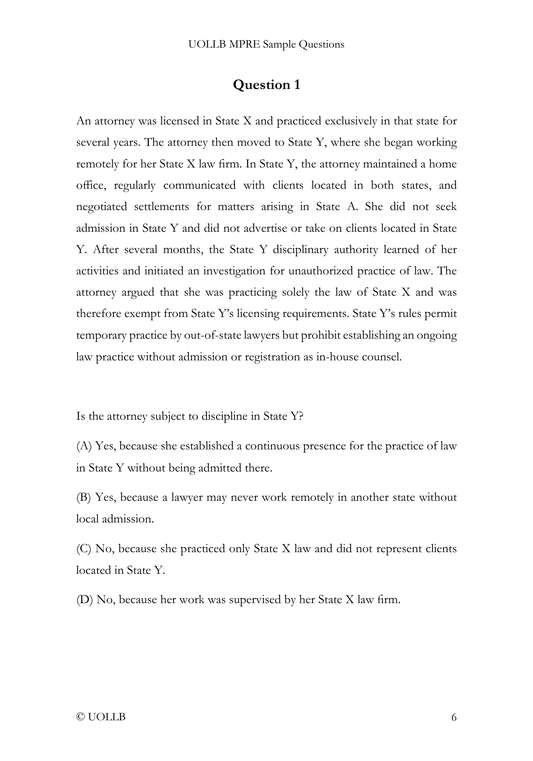
Practice questions play an indispensable role, especially those written in long fact-pattern format similar to NextGen UBE and modern MPRE style. These questions force you to apply the rules rather than merely recall them. As you practice, focus on the reasoning behind each answer choice. Correct answers almost always directly correspond to a clear rule, while incorrect choices tend to include common misconceptions, such as overstating a lawyer’s duty to withdraw, misunderstanding the scope of confidentiality, or assuming that personal morality permits bending the rules. The MPRE often tests exceptions as rigorously as general rules, so understanding when disclosure, withdrawal, or contact with represented persons is permitted or required is essential. After answering each practice question, carefully review explanations to internalize the logic and reinforce pattern recognition.
Time management is another crucial component. Although the MPRE allows generous time per question, many candidates lose points by rushing through fact patterns or by overthinking. A deliberate pace that prioritizes comprehension over speed produces better performance. Some examinees benefit from circling trigger phrases, such as “represented person,” “substantial likelihood,” “informed consent,” or “personally and substantially,” because these terms often anchor the applicable rule. Others find it useful to identify whether the conduct in question relates to duties owed to the client, the court, third parties, or the public, thereby narrowing the relevant rule set before evaluating answer choices. The most effective approach is consistent practice under exam conditions, which helps refine both accuracy and confidence.
Finally, studying for the MPRE is most effective when done in layers. Begin with a comprehensive review of the Model Rules and the logical relationships between them. Next, integrate practice questions to expose how the rules function in scenarios involving ambiguity or conflicting duties. Then, revisit the rules to clarify misunderstandings revealed by practice. This iterative cycle promotes mastery and prepares you to handle the nuance that characterizes the exam. The MPRE rewards examinees who understand the rules not as isolated directives but as components of a coherent system of professional responsibility. If you combine doctrinal study, disciplined practice, and thoughtful analysis of fact patterns, you can develop the judgment and agility needed to perform strongly on the MPRE and, ultimately, to navigate ethical challenges in professional practice.