How to Tackle NextGen UBE Integrated Question Sets
Share
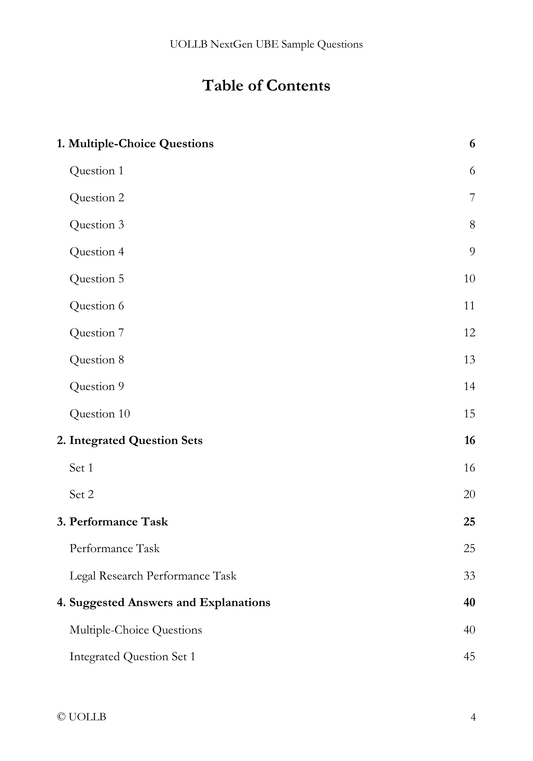
Integrated question sets are one of the defining innovations of the NextGen UBE, designed to test how effectively you can think, analyze, and communicate like a practicing lawyer. You will devote approximately a quarter of the total exam time to these sets, each of which presents a realistic legal scenario drawn from everyday practice. Rather than testing isolated rules of law, these questions assess your ability to apply legal knowledge across multiple formats, such as multiple-choice, short-answer, and medium-answer questions, based on a shared factual foundation. Some sets emphasize document drafting or editing, while others focus on client counseling, negotiation, or dispute resolution, reflecting the variety of real tasks lawyers perform in practice.
Each integrated question set revolves around a single, cohesive fact pattern. You may be given client interview notes, excerpts from contracts or pleadings, statutes, case law, or other documents such as police reports, deposition excerpts, or emails. These materials form the case file from which all subsequent questions are drawn. The first step in tackling an integrated question set is therefore to read the entire file carefully and holistically before attempting any questions. Approach it the way a lawyer would when first reviewing a client’s matter, so you typically need to identify the parties, their relationships, the procedural posture, and the underlying legal issues. As you read, distinguish between relevant and background facts, and note any ambiguities or conflicts that might bear on your analysis. Integrated sets often contain extraneous details intended to test your ability to focus on legally significant information.
Once you understand the factual framework, your next task is to integrate the legal resources provided, such as statutory excerpts or judicial opinions, into your reasoning. Because the exam may include several different types of legal sources, pay attention to the hierarchy and language of each. A statute may establish the governing rule, while a judicial opinion might interpret or qualify it. Read each provision with care, noting key definitions, exceptions, and standards of proof. The examiners do not expect you to memorize external law; instead, they assess your capacity to extract and apply the relevant principles from the resources given. Successful candidates treat these materials as if they were conducting research for a supervisor, identifying the controlling rules, applying them precisely to the facts, and articulating clear, well-reasoned conclusions.
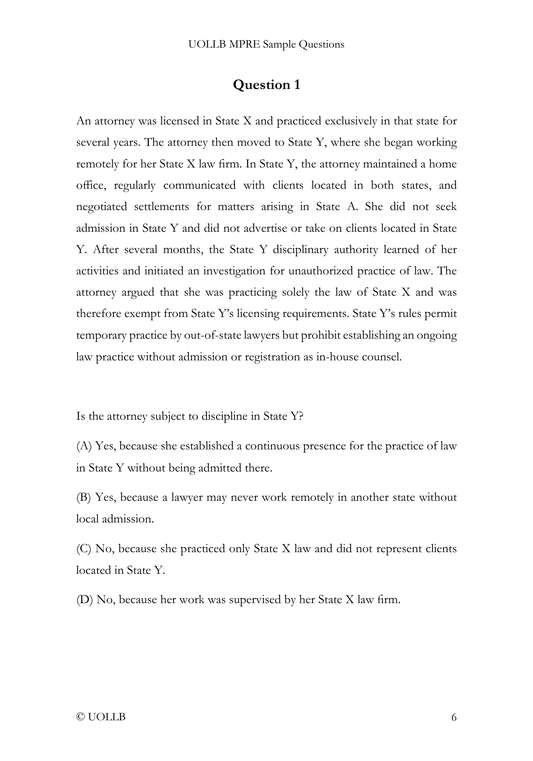
Integrated question sets also test adaptability across multiple formats. A set may begin with multiple-choice questions designed to assess your grasp of the legal framework, followed by short-answer questions requiring concise factual or legal analysis, and conclude with a medium-answer question that demands a more developed written explanation. You must adjust your tone and depth accordingly. Multiple-choice items reward precision and close reading; short answers require concise articulation of reasoning; medium answers test your ability to organize ideas, explain complex interactions, and communicate like a professional. To perform well, practice shifting fluidly between these modes of response while maintaining accuracy and coherence.
Because integrated question sets simulate law practice, they frequently incorporate practical lawyering tasks. You might be asked to correct errors in a draft complaint, identify legal risks in a client’s proposed course of action, or explain how a statutory provision affects a client’s rights. These exercises demand not only doctrinal understanding but also professional judgment. For instance, a drafting question may require attention to procedural form, while a counseling scenario may require you to balance legal accuracy with sensitivity to client objectives and risk tolerance. Always read the question prompt closely to determine what kind of product you are being asked to create, whether a legal analysis, a correction, or an advisory response, and tailor your writing style to fit that professional context.
Time management is crucial. Because integrated question sets combine several question types under one factual umbrella, it is easy to lose track of time while reviewing the documents. Start by spending a few minutes skimming the materials to identify the central legal issue and the structure of the set, then allocate time proportionally among the components: brief attention to multiple-choice items, moderate focus on short answers, and the most time on the medium-length response. Avoid rereading the entire file for each question; instead, focus on key paragraphs and relevant facts as you go and refer back to them when needed.