MPRE Key Words and Phrases
Share
The MPRE frequently uses specific legal terms and phrases that have particular meanings within the context of the exam. It is important to understand these key words and phrases because they guide you in determining the correct answer. Many MPRE questions involve subtle distinctions between different types of professional consequences, such as discipline, disqualification, civil liability, or criminal liability. You must therefore carefully interpret the terminology used in the question to identify the legal issue being tested.
Attorney
This term typically refers to the particular lawyer whose conduct is being evaluated in the question. When the term “lawyer” appears in the same question, it refers to a different lawyer whose conduct is not directly at issue. In some cases, questions may also use more specific titles such as “litigator,” “prosecutor,” “judge,” “associate,” or “managing partner.” These functional titles are used to clarify the role of the individual involved, provided they do not create ambiguity.
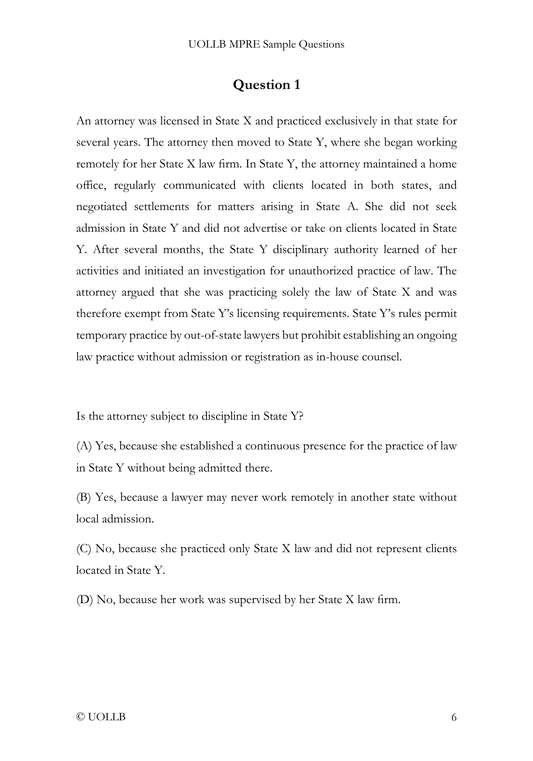
Subject to Discipline
When a question asks whether an attorney is subject to discipline, it is asking whether the conduct described would violate the ABA Model Rules of Professional Conduct and therefore expose the lawyer to professional disciplinary action. If the question involves a judge, the issue instead concerns whether the conduct would violate the ABA Model Code of Judicial Conduct and subject the judge to disciplinary measures.
May / Proper
These terms ask whether the conduct described is professionally acceptable. Conduct is considered proper if it would not subject the attorney or judge to discipline, if it is consistent with the language and principles of the relevant professional conduct rules, and if it aligns with generally accepted principles governing the legal profession.
Subject to Litigation Sanction
This phrase asks whether the conduct would expose the lawyer or the lawyer’s firm to sanctions imposed by a court or tribunal. Such sanctions may include monetary fines, fee forfeiture, contempt penalties, or other procedural sanctions imposed during litigation.
Subject to Disqualification
This phrase refers to whether the attorney or the attorney’s law firm would be barred from representing a client in a particular civil or criminal case because of a conflict of interest or another ethical concern. Disqualification prevents the lawyer from continuing to act as counsel in the matter.
Subject to Civil Liability
This phrase refers to whether the attorney or the law firm could be held legally liable in a civil lawsuit. This may arise from claims such as legal malpractice, misrepresentation, or breach of fiduciary duty owed to a client or third party.
Subject to Criminal Liability
This phrase concerns whether the lawyer’s conduct could lead to criminal prosecution. Examples may include actions such as fraud, destruction of evidence, obstruction of justice, or other criminal offenses committed in the course of legal practice.
Disciplinary Authority
This term refers to the organization or entity responsible for enforcing the rules of professional conduct within a particular jurisdiction. This authority may include a state bar disciplinary committee, a court, or another regulatory body that has the power to investigate and discipline lawyers for professional misconduct.
Lawyer-Client Relationship / Client-Lawyer Relationship
These terms refer to the professional relationship that arises when a lawyer agrees to provide legal representation or advice to a client. It is important to understand when this relationship is formed because many professional duties, such as confidentiality, competence, and loyalty, arise once the relationship exists.