NextGen UBE Questions
Share
The NextGen UBE is designed to measure both your foundational legal knowledge and your ability to apply that knowledge through practical lawyering skills. It represents a shift from memorization-based assessment toward an integrated evaluation of real-world competence. The exam tests whether new lawyers can analyze complex legal issues, counsel clients effectively, conduct sound legal research, and communicate their reasoning in clear and professional written work.
The NextGen UBE tests the core doctrinal subjects known as the Foundational Concepts and Principles. These include Civil Procedure, Contract Law, Evidence, Torts, Business Associations, Constitutional Law, Criminal Law, Real Property, and Family Law (starting from July 2028). Selected provisions of the MRPC will also be tested throughout the exam. Together, these areas form the doctrinal base upon which all lawyering skills in the exam are built.
The NextGen UBE also assesses a set of Foundational Skills that are considered essential for competent legal practice. These skills include the ability to identify and analyze issues, investigate facts, and evaluate evidence in a structured and reasoned manner. You will also be expected to demonstrate proficiency in client-focused tasks such as counseling, advising, negotiation, dispute resolution, and client relationship management. You must also be able to conduct efficient legal research using appropriate sources and communicate their findings through well-organized, persuasive legal writing and drafting. These skills are interwoven throughout the exam, ensuring that each component reflects how legal reasoning and professional judgment function together in practice.
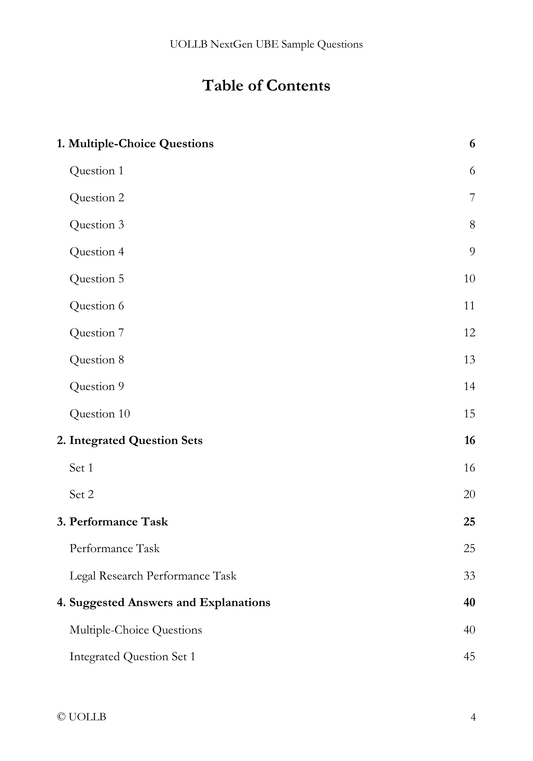
The structure of the NextGen UBE consists of three main categories of question types: multiple-choice questions, integrated question sets, and performance tasks.
Multiple-Choice Questions
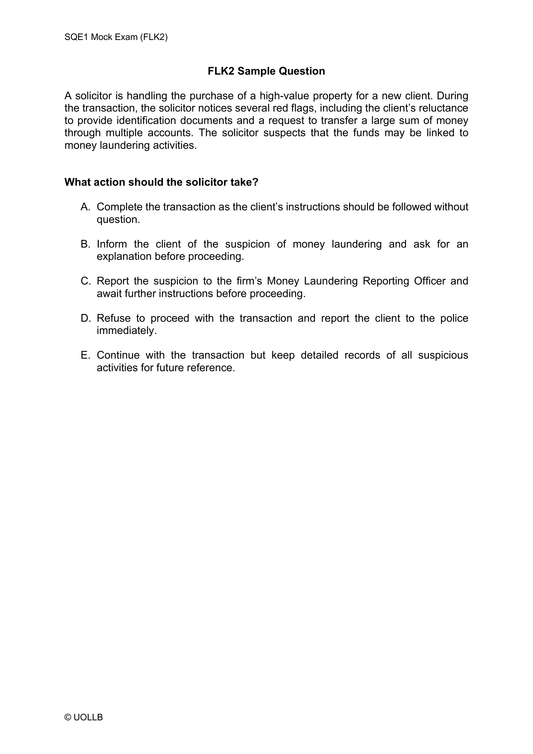
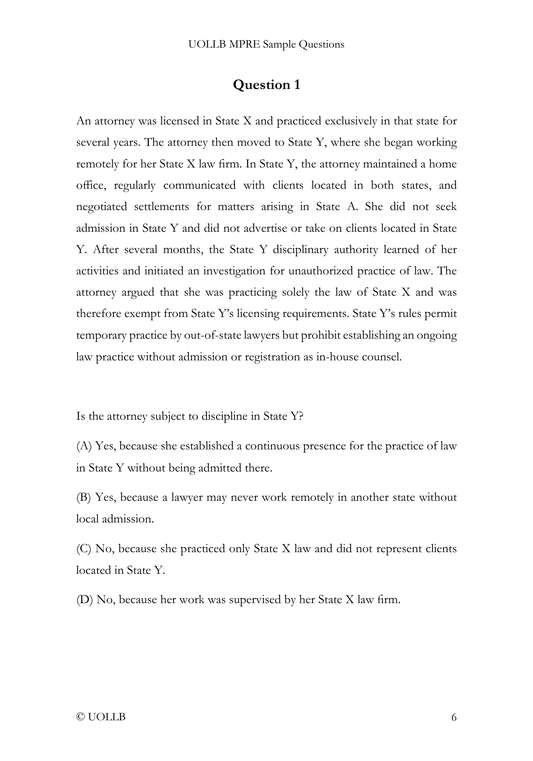
Approximately 72 minutes of the exam time will be allocated to standalone multiple-choice questions in each section. These will feature between four and six answer options and may contain one or more correct answers. Initially, many of these questions will resemble those on the Multistate Bar Examination to ensure continuity and comparability in scoring between the existing and new formats. Over time, however, the NextGen UBE will introduce a broader variety of multiple-choice formats to assess a more nuanced understanding of law and reasoning. Some multiple-choice questions will also appear within integrated question sets and performance tasks, testing the ability to apply doctrinal knowledge in context.
Integrated Question Sets
Approximately 48 minutes will be dedicated to two integrated question sets in each section. Each set is based on a shared factual scenario and may include excerpts from legal sources such as statutes, judicial opinions, or administrative materials, as well as supplementary documents like police reports, deposition excerpts, or client correspondence. Within each set, you will encounter a mixture of multiple-choice, short-answer, and medium-answer questions. Some integrated question sets will focus on drafting or editing legal documents, while others will emphasize client counseling, negotiation, or dispute resolution. This component evaluates not only a candidate’s grasp of the law but also their ability to interpret information, make informed judgments, and communicate advice effectively.
Performance Tasks
Approximately 60 minutes of the exam time will be spent on one performance task, modeled after the current Multistate Performance Test (MPT). These tasks simulate authentic legal assignments that an entry-level lawyer should be capable of handling, such as drafting a memorandum, preparing a client letter, or writing a motion based on provided materials. Each task includes a file containing relevant facts and documents, as well as a library of legal authorities. While most performance tasks will draw upon the foundational subjects, they may also include other areas of law not listed among the Foundational Concepts and Principles, such as Trusts and Estates, Intellectual Property, or Administrative Law. One of the longer performance tasks will include multiple-choice and short constructed-response questions that assess research skills, followed by a comprehensive writing assignment requiring integration of research and legal analysis.
The NextGen UBE differs from traditional bar examinations in that it does not separate doctrinal knowledge from practical skills. Instead, it blends them throughout every section of the assessment. Examinees must not only know the law but also demonstrate their capacity to apply it effectively, ethically, and professionally. The result is an examination that more accurately reflects the realities of legal practice and ensures that successful candidates are truly prepared to enter the profession with competence and confidence.