Multistate Professional Responsibility Examination (MPRE)
Share
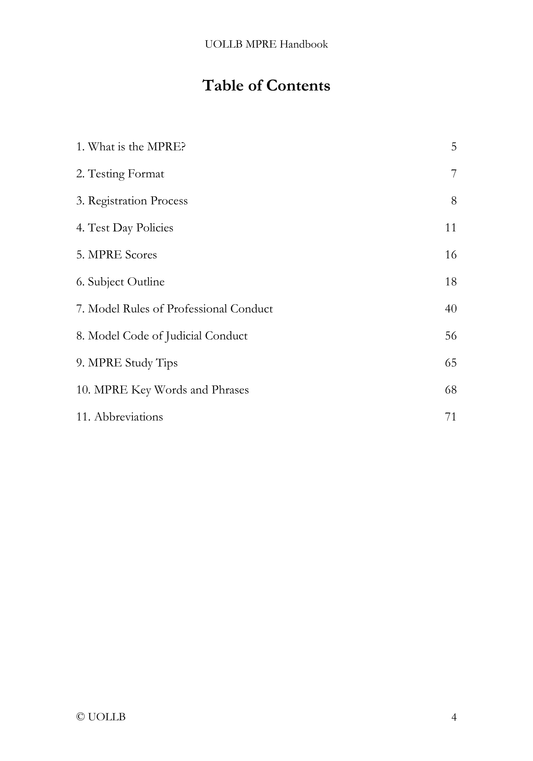
The Multistate Professional Responsibility Examination (MPRE) is a standardized ethics examination developed by the NCBE to assess your knowledge and understanding of the professional conduct rules governing lawyers. First administered in 1980, the MPRE consists of a two-hour test containing 60 multiple-choice questions and is offered three times each year, typically in March, August and November. The exam focuses on the ethical standards that regulate lawyers’ professional responsibilities, including duties to clients, courts, and the legal profession, as reflected primarily in the ABA Model Rules of Professional Conduct, the ABA Model Code of Judicial Conduct, and related legal authorities.
The MPRE is not part of the Uniform Bar Exam but is a prerequisite or corequisite for admission to the bar in most U.S. jurisdictions. It is required in 49 states as well as the District of Columbia and several U.S. territories, including Guam, the Northern Mariana Islands, the U.S. Virgin Islands, and the Republic of Palau. Only two jurisdictions, Wisconsin and Puerto Rico, do not require the MPRE, although they still test professional responsibility within their own bar examinations. In addition, some jurisdictions provide limited alternatives. For example, Connecticut and New Jersey allow candidates to satisfy the ethics requirement by earning a specified passing grade in a law school course on professional responsibility.
The purpose of the MPRE is to measure your knowledge of the legal standards that govern lawyers’ professional conduct rather than to evaluate your personal moral beliefs. Lawyers perform many roles within the legal system, including serving as advocates, counselors, and officers of the court. The rules governing professional conduct regulate these roles and are applied in bar admission decisions, disciplinary proceedings, malpractice claims, and court proceedings involving issues such as conflicts of interest, confidentiality, representation, and professional misconduct. As a result, the MPRE ensures that prospective lawyers understand the ethical obligations that accompany the practice of law.