NextGen UBE Key Words and Phrases

The NextGen UBE requires not only legal knowledge but also mastery of specific terms that guide how you analyze and respond to questions. It commonly includes key words and phrases that shape the nature of the task presented, so it is important to know their precise meanings so that you can address the questions effectively.

Argument 
An argument supports a position by offering reasons why something is true or false, right or wrong, or preferable or inferior. In legal analysis, making an argument involves connecting facts to legal standards logically and persuasively.

Legal Argument
A legal argument specifically requires applying the facts of a scenario to the relevant legal rules. This application should be structured, grounded in authoritative law, and aligned with the client or party’s position.

Dispositive Fact
A dispositive fact is a key fact that determines the outcome of a matter because it directly influences the application of a legal rule or test. Identifying dispositive facts allows you to focus your analysis on the most important elements of the scenario.

Explain
When a question asks you to explain, it requires more than just identifying or stating a rule. You must interpret the rule, apply it to the facts, and logically articulate the reasoning that leads to your conclusion.

Factor
A factor can refer to a component of a legal test (such as the factors in the fair use analysis in copyright law) or a fact, inference, or conclusion that contributes to the overall result. You may be asked to identify which factors weigh in favor of or against a party’s position.

Implication
An implication refers to a logical inference or potential consequence that arises from the facts or legal standards. It involves recognizing what might happen or be inferred even if a particular outcome is not explicitly stated.

Issue
An issue is a question to resolve, and it may be either legal (e.g., ‘Did the defendant breach the contract?’) or factual (e.g., ‘Did the defendant intend to deceive?’). Some questions will specify which type of issue to identify or address.

Reason
A reason is a justification for a particular outcome, decision, recommendation, or conclusion. When formulating a response, you must identify not just the conclusion but also the underlying reasoning that supports it.

Specific
The term specific means that your answer should address the unique facts or details offered in the prompt. Avoid general statements that are not tailored to the narrative of the scenario.

Support
To support means to offer a fact, argument, or rule that helps bolster a client’s or party’s position. Importantly, support does not require that the fact or argument be dispositive, as it simply needs to favor the conclusion you are advocating for.

Back to blog

Join candidates from Legal 500 firms, top universities and international organisations who trust UOLLB

Council of Europe
Crown Prosecution Service
Ministry of Defence
Baker Mckenzie
Linklaters
Atsumi & Sakai
Yale University
University of Chicago
Columbia University
New York University
University of Michigan
INSEAD
University of London
University College London (UCL)
London School of Economics (LSE)
King’s College London (KCL)
Royal Holloway, University of London 
Birkbeck, University of London
SOAS, University of London
University of Manchester
University of Zurich
University of York
Brandeis University
University of Exeter
University of Sheffield
Boston University
University of Washington
University of Leeds
University of Law
University of Kent
University of Hull
Queen’s University Belfast
Arizona State University
McGill University
Toronto Metropolitan University
University of Hong Kong (HKU)
Hong Kong University of Science and Technology (HKUST)
University of Buckingham
Robert Gordon University
ESSEC Business School
University of Puerto Rico

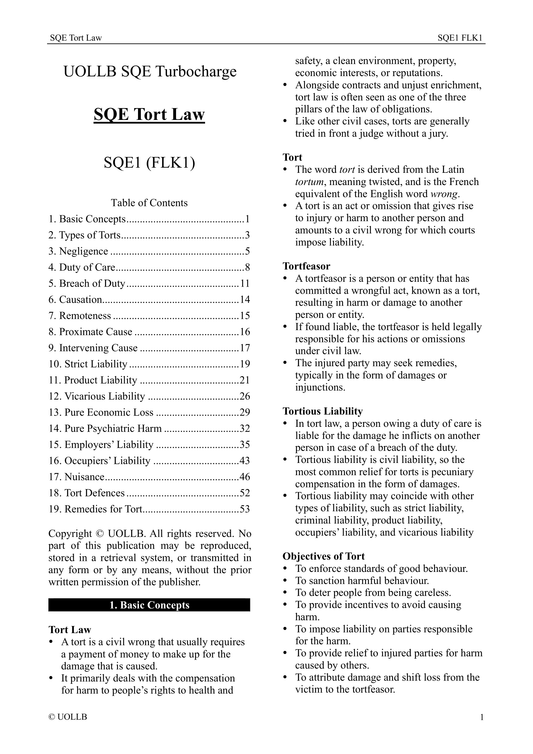
  • SQE Wills and the Administration of Estates

    Diagrams and Flowcharts

    Our carefully designed diagrams and flowcharts will guide you through complex legal issues.

  • SQE Dispute Resolution

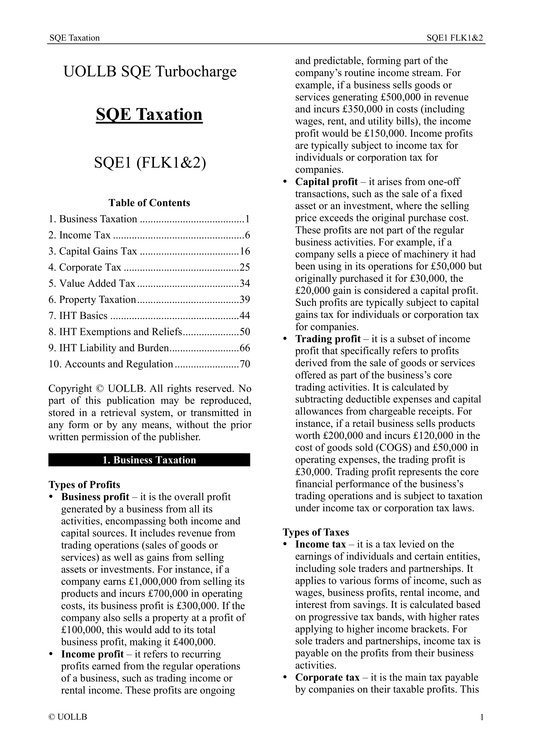
    Digestible Bullet Points

    Legal concepts are explained in clear, easy-to-follow bullet points.

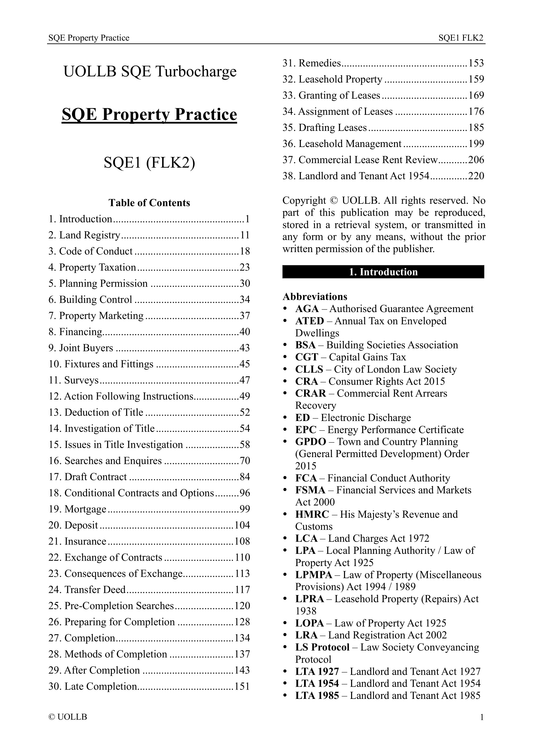
  • SQE Property Practice

    Clear and Succinct Definitions

    Key concepts are concisely defined to help you understand legal topics quickly.

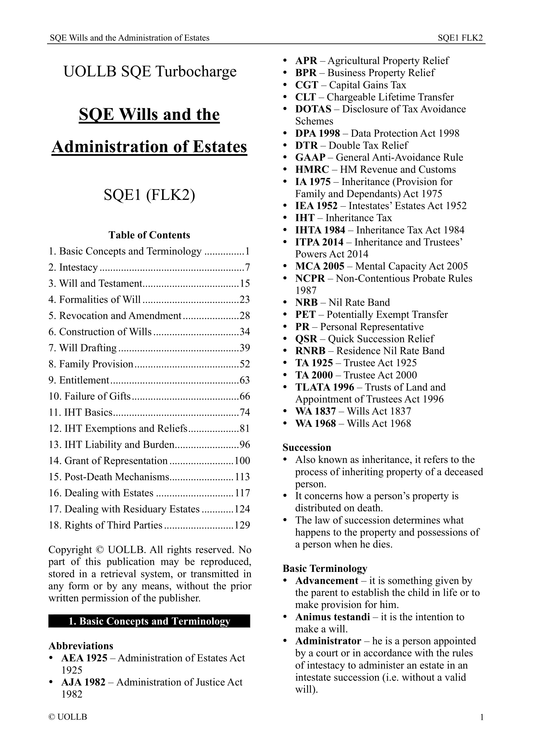
  • SQE Wills and the Administration of Estates

    Statutory Provisions

    Statutory provisions are provided side by side with legal concepts to help you swiftly locate the relevant legislation.

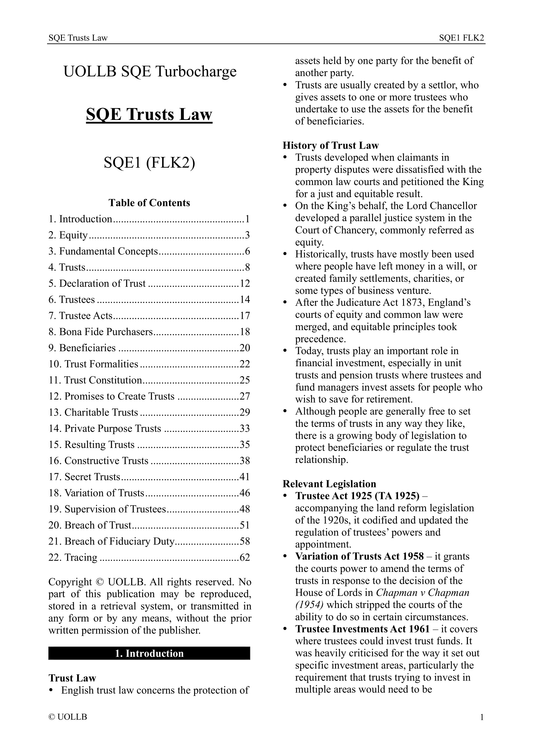
  • SQE Trusts Law

    Rules and Exceptions

    Rules and exceptions are clearly listed so that you know when a rule applies and when it doesn't.

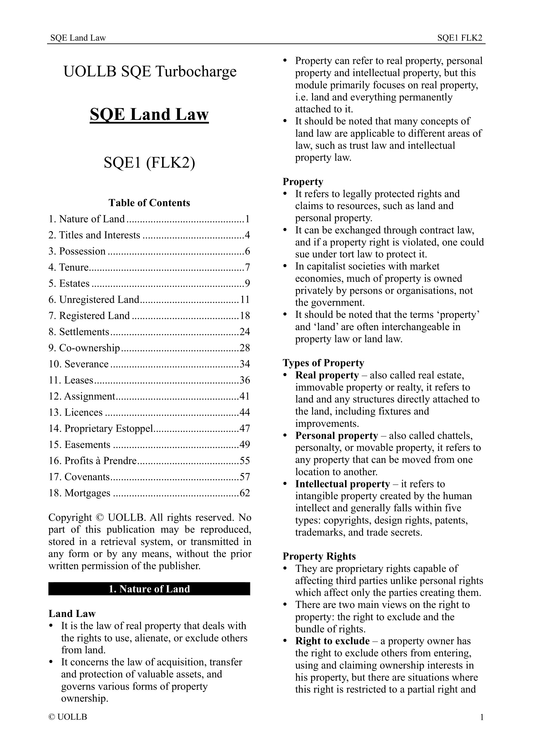
  • SQE Land Law

    Terminology

    Legal terms and key concepts are explained at the beginning of each chapter to help you learn efficiently.

  • SQE Dispute Resolution

    Structured Illustrations

    Complex legal procedures are explained and visualised step by step with flowcharts.

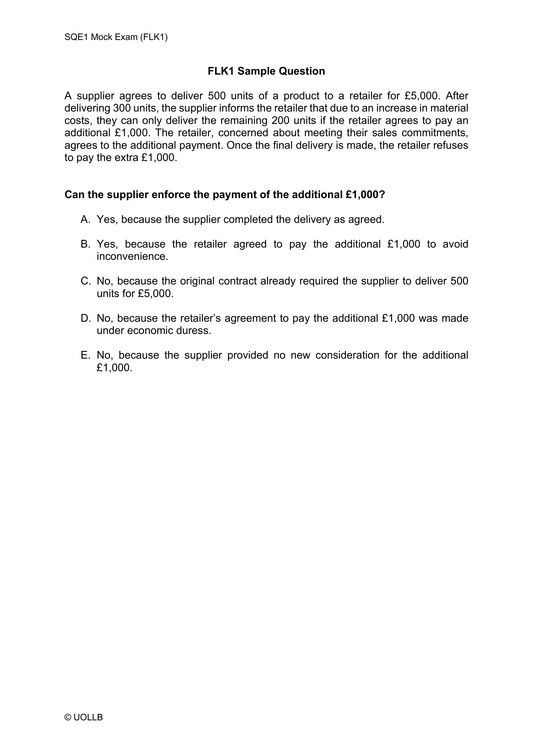
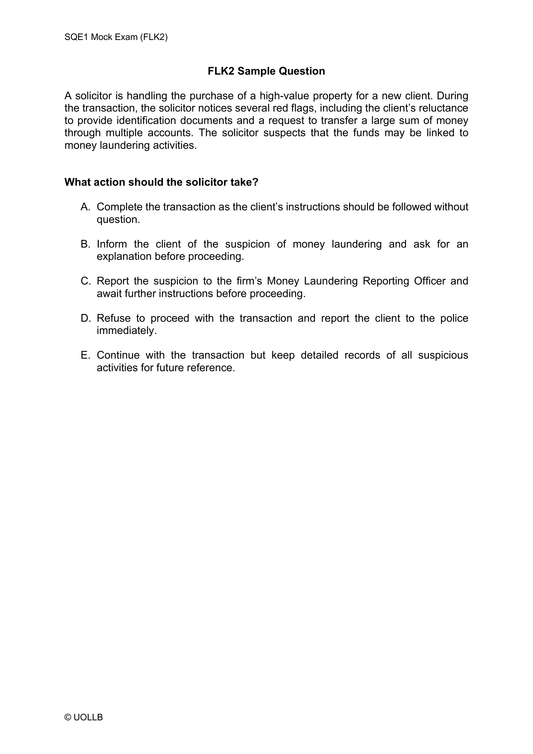
  • SQE1 Sample Question

    Practice Questions

    SQE1-style questions are provided to help you become familiar with the exam format.

  • SQE1 Sample Question

    Detailed Explanations

    Practice questions are explained in detail so that you know how to select the best answer out of the five plausible options.

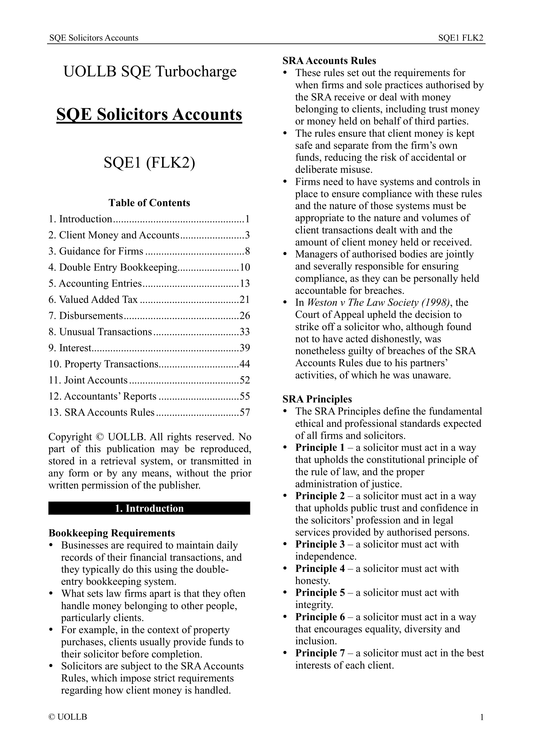
  • SQE Solicitors Accounts

    Real-World Scenarios

    Real-world scenarios are provided to help you understand how legal concepts, rules, and regulations are applied in practice.

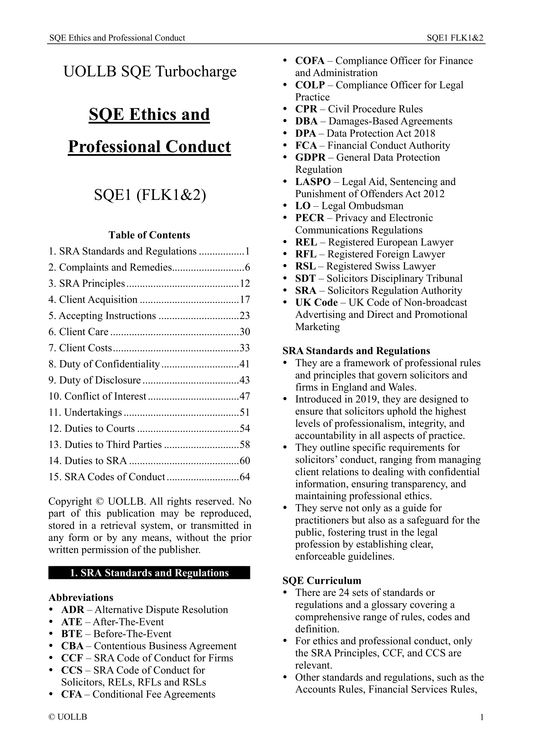
  • SQE Ethics and Professional Practice

    Ethical Considerations

    Solicitors' ethics and professional conduct are presented in concise, digestible bullet points.

  • SQE Wills and the Administration of Estates

    Legal Principles and Concepts

    Legal principles and concepts are broken down into clear, concise explanations, making them easier to understand and apply.