NextGen Client Relationship and Management
Share
Client relationship and management skills involve building trust, maintaining effective communication, and managing expectations throughout the legal process. Successful lawyers cultivate long-term professional relationships through reliability, transparency, and ethical conduct. This competency also includes time management, billing practices, and adherence to confidentiality and fiduciary duties. The NextGen UBE emphasizes that strong client management is not merely administrative, as it reflects professionalism, integrity, and the ability to deliver value consistently in a client-focused legal practice.
Trust forms the cornerstone of every lawyer–client relationship. The NextGen UBE assesses your ability to foster confidence through reliability, transparency, and competence. This includes setting clear expectations from the outset, honouring commitments, and ensuring the client feels informed and respected at every stage. Candidates must demonstrate awareness of the fiduciary nature of the relationship and the duty to act in the client’s best interests, consistent with MRPC Rules 1.1 (Competence) and 1.3 (Diligence).
Clear, timely, and honest communication is essential for effective client management. You must demonstrate the ability to explain complex legal concepts in plain language, provide realistic assessments of risks and outcomes, and maintain ongoing dialogue about case progress. The NextGen UBE emphasizes MRPC Rule 1.4 (Communications), which requires lawyers to keep clients reasonably informed and promptly comply with requests for information. Strong communication also includes listening actively to clients’ concerns and ensuring mutual understanding of goals and limitations.
Ethical conduct lies at the heart of client management. Lawyers must safeguard client information under MRPC Rule 1.6 (Confidentiality of Information) and avoid conflicts of interest as outlined in MRPC Rule 1.7 (Conflict of Interest: Current Clients). The NextGen UBE expects candidates to demonstrate judgment in handling sensitive information, recognising when disclosure is permitted or required by law, and maintaining discretion in all professional interactions. Upholding confidentiality fosters client confidence and reinforces the integrity of the profession.
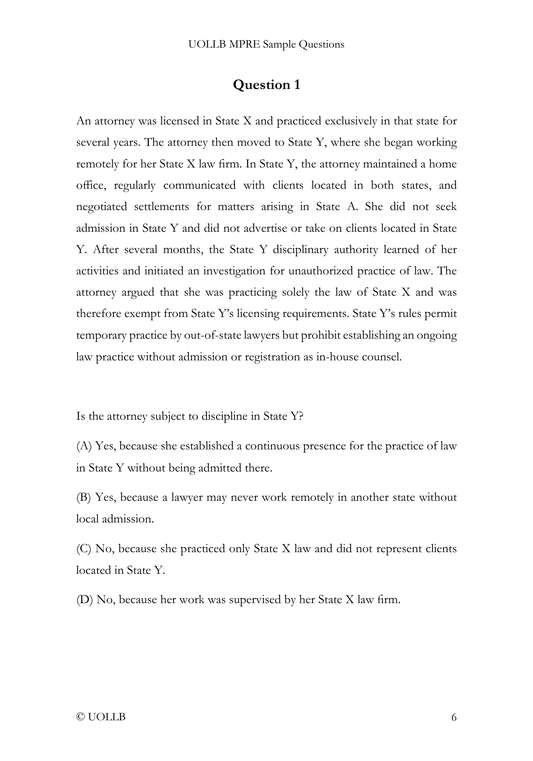
Lawyers must balance zealous representation with professional independence. Under MRPC Rule 1.2 (Scope of Representation and Allocation of Authority Between Client and Lawyer), you are expected to respect the client’s objectives while maintaining authority over strategic and technical decisions. Effective client management requires addressing unrealistic goals diplomatically, clarifying achievable outcomes, and advising clients when their preferred course of action may breach legal or ethical standards. The ability to navigate these boundaries demonstrates both professionalism and sound judgment.
Strong client management includes effective case administration, such as time management, recordkeeping, and billing transparency. Lawyers must organise their workload to ensure timely completion of tasks and adherence to deadlines, reflecting diligence and reliability. Transparent billing practices and clear communication about fees help prevent disputes and promote client satisfaction. In the NextGen UBE context, these practical skills demonstrate that candidates can operate efficiently and ethically in a professional environment.
Successful client management extends beyond a single matter. The ability to cultivate lasting professional relationships through integrity, competence, and consistency is key to a sustainable legal career. Lawyers who prioritize client satisfaction, provide value-driven service, and maintain ethical conduct strengthen both their personal reputation and the public’s trust in the legal system. The NextGen UBE recognizes that professionalism and empathy are as critical as analytical ability in defining the modern lawyer’s success.