How Can Foreign Lawyers Qualify to Practise Law in the United States?
Share
Foreign lawyers who wish to practise law in the United States must meet several regulatory requirements before they can be admitted to a state bar. In general, a foreign trained lawyer must demonstrate that they satisfy the minimum legal education requirements, pass the relevant bar examination, and prove that they possess the moral character and fitness required to practise as a lawyer. These requirements are designed to ensure that anyone admitted to the profession has sufficient legal knowledge, competence, and ethical standards to serve clients and the justice system.
One of the most distinctive features of the American legal system is that the legal profession is regulated at the jurisdictional level rather than nationally. Unlike most countries where admission to the legal profession is controlled by a national authority, the United States has separate admission rules for each jurisdiction. There are 57 jurisdictions in total, including the 50 states, the District of Columbia, and several U.S. territories. Each jurisdiction sets its own rules governing who may sit for the bar examination and who may be admitted to practise law. As a result, a foreign lawyer must decide which jurisdiction they intend to practise in and carefully review that jurisdiction’s admission requirements.
Although the rules differ across jurisdictions, foreign lawyers typically must satisfy several common requirements. These generally include meeting legal education requirements, passing a character and fitness review, passing the bar examination, and passing a professional ethics examination. Because the rules change from time to time and vary across jurisdictions, it is essential for you to consult the official admission rules of the relevant state before beginning the qualification process.
Legal education is often the first hurdle for internationally trained lawyers. In the United States, the standard qualification for lawyers is a Juris Doctor degree from a law school accredited by the American Bar Association (ABA). However, many foreign lawyers already possess a law degree from another country, such as a Bachelor of Laws. Some jurisdictions allow foreign lawyers to qualify based on their foreign legal education and professional experience, particularly if the degree is based on the English common law system. In practice, however, most states require foreign trained lawyers to complete additional legal education in the United States. A common route is to obtain a Master of Laws degree from an ABA accredited law school. For example, Washington State allows foreign lawyers to meet the supplemental legal education requirement by completing an LL.M. program that includes substantial instruction in U.S. law. Similarly, California requires foreign lawyers to complete additional credits in an LL.M. program covering subjects tested on the bar examination.
In addition to educational qualifications, applicants must demonstrate good moral character and fitness to practise law. This process is known as the character and fitness review. You must complete a detailed questionnaire providing information about your personal and professional background. This includes disclosures relating to criminal history, disciplinary proceedings, financial responsibility, substance abuse, or other issues that may affect your suitability to practise law. Committees appointed by state courts or bar authorities review the information provided and may conduct further investigations before determining whether you satisfy the character and fitness requirement.
Another key requirement is passing the bar examination. Every jurisdiction requires you to pass examinations designed to test legal knowledge and the ability to apply the law to practical situations. Many jurisdictions administer the Uniform Bar Examination (UBE), which was developed by the National Conference of Bar Examiners (NCBE). The traditional UBE consists of three components. The Multistate Bar Examination (MBE) is a multiple choice test covering core subjects such as constitutional law, criminal law, evidence, real property, contracts, and torts. The Multistate Essay Examination (MEE) requires you to answer essay questions on a range of legal subjects including business associations, civil procedure, trusts and estates, and secured transactions. The Multistate Performance Test (MPT) evaluates practical lawyering skills by asking you to complete tasks such as drafting legal memoranda or analysing case files.
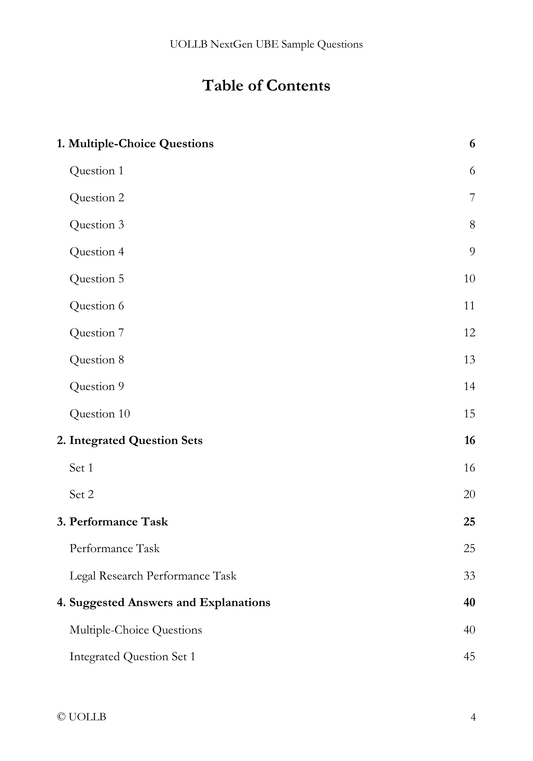
However, the U.S. bar examination system is currently undergoing a significant transition. Beginning in July 2026, the NCBE will introduce the NextGen UBE. This new examination represents the first major redesign of the bar exam in more than two decades and is intended to better reflect the knowledge and skills required for modern legal practice. The NextGen UBE places greater emphasis on practical lawyering skills and less emphasis on rote memorization of legal rules. It evaluates both doctrinal knowledge and foundational professional skills such as legal analysis, legal research, client counseling, and problem solving. The exam will include several different types of questions, including stand alone multiple choice questions, integrated question sets combining multiple choice and short answer responses, and performance tasks that simulate real legal work such as drafting documents or analysing legal files. The structure of the NextGen UBE is also different from the current system. The exam will be shorter, lasting approximately nine hours over one and a half days rather than the traditional two day format. Scores will be reported on a scale ranging from 500 to 750, with each jurisdiction setting its own passing score. The new exam will begin rolling out in selected jurisdictions in July 2026, and the traditional UBE will be phased out entirely by 2028.
Some states administer their own versions of the bar examination instead of the full UBE. For example, California requires applicants to take the MBE but uses its own essay examinations rather than the MEE or the MPT. Louisiana also administers its own bar examination because its legal system is based on civil law rather than the common law system used in most other U.S. states.
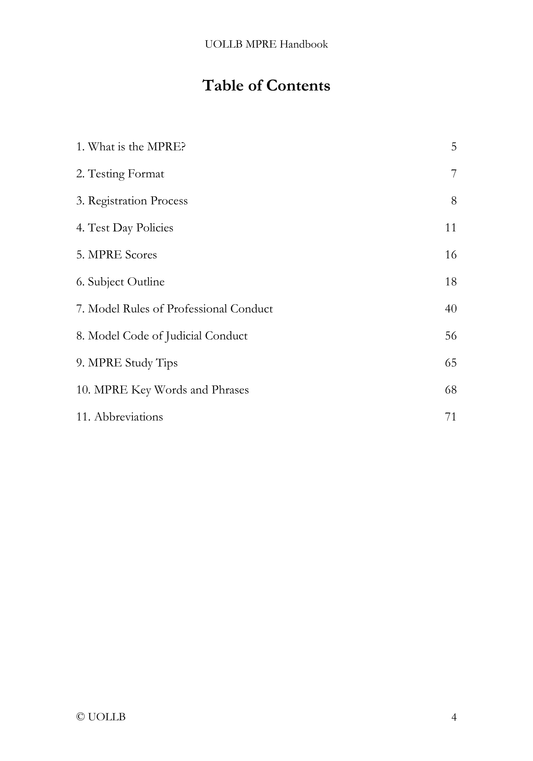
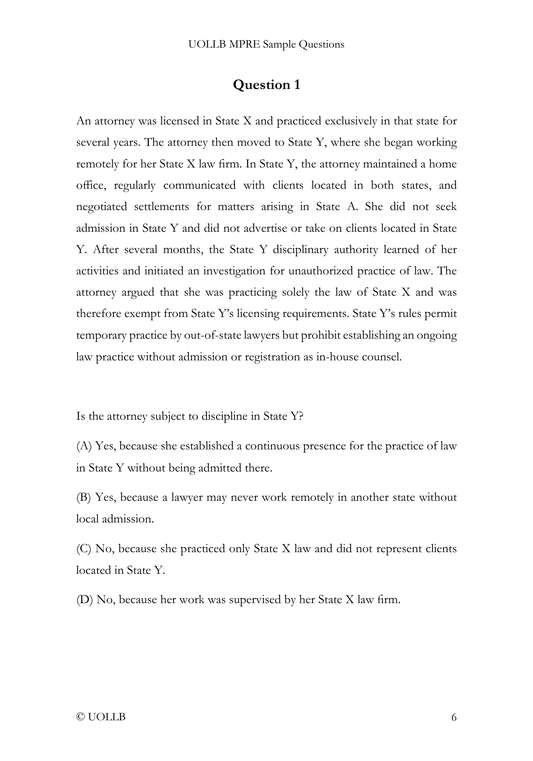
Most jurisdictions also require candidates to pass a separate legal ethics examination known as the Multistate Professional Responsibility Examination (MPRE). This examination tests knowledge of professional conduct rules and ethical responsibilities that govern lawyers in the United States. The test covers topics such as conflicts of interest, client confidentiality, duties to the court, legal malpractice, and the proper handling of client funds. The only state that does not require the MPRE is Wisconsin.
Foreign lawyers often ask whether U.S. citizenship is required to practise law in the United States. The answer is no. No state requires applicants to be U.S. citizens in order to sit for the bar examination or be admitted to practise law. However, foreign lawyers who intend to work in the United States must comply with U.S. immigration laws and obtain appropriate authorization to work.
Foreign law degrees may also be recognised in the United States, but they are subject to evaluation by state bar authorities. Many jurisdictions require foreign trained lawyers to complete additional legal education at an ABA accredited law school before they are permitted to sit for the bar examination. In addition, a foreign lawyer generally cannot provide legal advice in the United States unless they are admitted to at least one state’s bar. Some jurisdictions allow foreign lawyers to work as foreign legal consultants, which permits them to advise clients on the law of their home jurisdiction but not on U.S. law.
Preparing for the bar examination requires careful planning and substantial study. Bar examinations are typically administered twice each year over two days. You should begin preparing well in advance, often at least a year before the exam date. Preparation usually involves reviewing the admission rules for the relevant jurisdiction, completing the character and fitness application, paying examination fees, and enrolling in a bar preparation course designed to prepare you for the specific examination you intend to take.