Introduction to the NextGen UBE
Share
The NextGen Uniform Bar Examination, often simply referred to as the NextGen UBE, represents a major modernization of the traditional bar examination used to license lawyers in the United States. Developed by the National Conference of Bar Examiners (NCBE), the new exam is designed to replace the traditional UBE and better align the licensing process with the real-world demands of legal practice. The reform is the result of years of consultation with lawyers, judges, legal educators, employers, and other stakeholders in the legal profession. The goal is to ensure that newly licensed lawyers possess not only legal knowledge but also the practical skills required for modern legal work. The NCBE began exploring possible changes to the bar examination around 2018, recognising that the existing exam structure needed to evolve to reflect how lawyers actually practice law.
Purpose of the NextGen UBE
The primary purpose of the NextGen UBE is to ensure that newly licensed lawyers possess the practical competencies necessary to begin practising law effectively. the traditional UBE focused heavily on memorization and recall of legal rules. In contrast, the NextGen UBE emphasizes foundational legal skills, problem-solving ability, and ethical decision-making. The exam aims to assess whether you can apply legal principles in realistic scenarios that resemble tasks commonly performed by entry-level lawyers. By focusing on practical lawyering abilities, the new exam seeks to ensure that newly admitted lawyers are better prepared to handle the complexities of modern legal practice.
Timeline for Implementation
The NextGen UBE will be introduced gradually across U.S. jurisdictions. The first administration of the exam will take place in July 2026. For a transitional period of two years, both the traditional UBE and the NextGen UBE will be available. The traditional UBE will continue to be offered until the February 2028 administration. This transitional period allows law schools, bar exam candidates, and jurisdictions sufficient time to adapt to the new format.
Although many jurisdictions that currently administer the traditional UBE have announced plans to adopt the NextGen UBE, not all states will use the new format. For example, Nevada has chosen not to adopt the NextGen UBE. Instead, the Nevada Supreme Court approved a unique Nevada Plan for licensure beginning in February 2027. This new, custom three-part exam includes a 100-question foundational law exam, three two-hour performance tests, and a supervised practice component, replacing the current bar format after July 2026. Because of these differences, you must check with the bar admissions authority in their intended jurisdiction to determine which exam format applies.
Key Changes in the Exam Structure
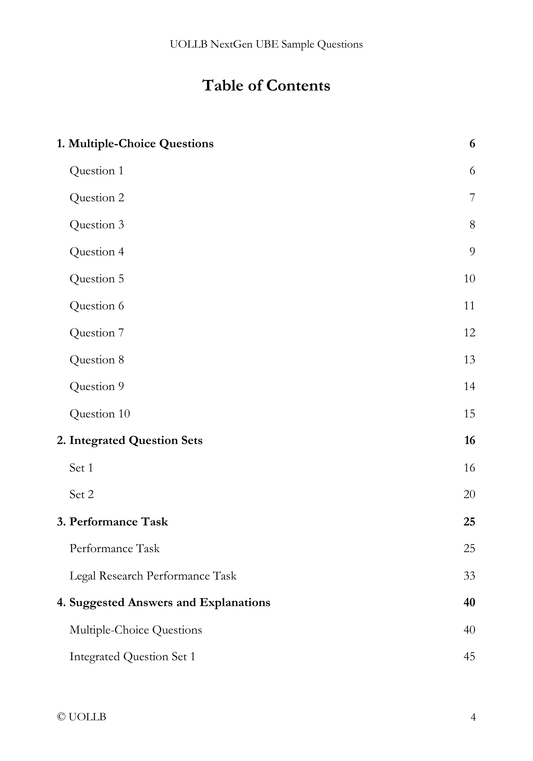
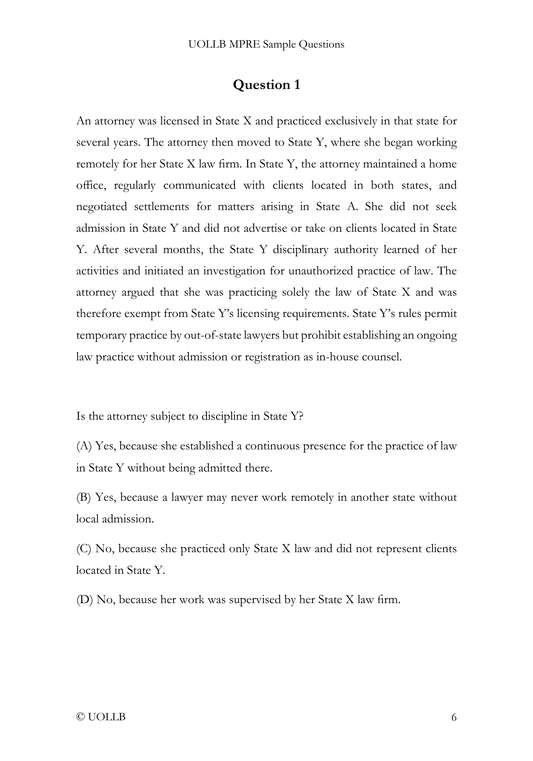
The NextGen Bar Exam introduces several significant structural changes designed to better evaluate the practical abilities of future lawyers. Under the traditional UBE, a large portion of the test consists of 200 standalone multiple-choice questions. The NextGen UBE replaces much of this format with integrated question sets that combine multiple areas of law within realistic legal scenarios. These question sets require you to apply legal rules, analyze facts, and demonstrate professional judgment in ways that reflect actual legal work.
Performance tasks will remain an important component of the exam. These tasks simulate real-world legal assignments such as drafting memoranda, analyzing case files, or preparing legal arguments. The performance tasks are intended to evaluate your ability to reason through legal problems, communicate clearly, and apply the law effectively.
In addition, the NextGen Bar Exam introduces short-answer questions that test your ability to apply legal concepts to practical problems. This change reduces the emphasis on rote memorization and instead focuses on analytical thinking and professional skills. The overall length of the exam will also be reduced. The NextGen UBE will be administered over approximately one and a half days, rather than the traditional two-day format used by the current bar examination.
Changes in Exam Content
Most of the core subjects currently tested on the UBE will remain part of the NextGen UBE. These subjects include Civil Procedure, Constitutional Law, Contracts, Criminal Law and Constitutional Protection of Accused Persons, Evidence, Real Property, Torts, and Business Associations and Relationships. Beginning in July 2028, Family Law will be added as an additional tested subject.
Some subjects will be tested in different ways under the new system. For example, Trusts and Estates will not appear as a standalone memorization-based subject on the NextGen UBE between July 2026 and at least February 2028. Instead, it will appear within performance tasks. In these tasks, the legal rules necessary to answer the question will be provided to you. Rather than memorizing specific legal doctrines, you will be required to interpret and apply the provided legal materials to solve problems or draft legal documents.
Professional Responsibility will also become part of the NextGen UBE. Ethical issues may appear within integrated questions that require you to apply professional conduct rules in practical scenarios. As a result of these adjustments, certain subjects previously tested on the UBE, such as Conflicts of Laws and Secured Transactions, will generally no longer be tested as standalone subjects.
The new exam also expands the range of lawyering skills being evaluated. The traditional UBE primarily focused on issue spotting, legal analysis, and legal writing. The NextGen UBE broadens this approach by assessing additional skills such as legal research, factual investigation, evaluation of evidence, client counseling, negotiation, dispute resolution, and client relationship management.
Testing Methods
The NextGen UBE will be administered entirely in a computer-based format. This represents a significant shift from traditional pencil-and-paper testing methods. The familiar fill-in-the-bubble answer sheets used for multiple-choice questions will be eliminated. You will take the exam on laptops either provided at the testing center or on your own approved devices, depending on the requirements of the jurisdiction administering the exam.
The move to digital testing allows for more efficient exam administration and scoring. It also reduces errors associated with manual answer sheets and provides a more streamlined testing experience. Computer-based testing also makes it easier to incorporate complex question formats, integrated materials, and performance tasks that simulate real legal work.
Jurisdictions Adopting the NextGen UBE
Many jurisdictions across the United States have announced plans to adopt the NextGen UBE over the coming years. Several jurisdictions will implement the new exam beginning in July 2026, including Connecticut, Guam, Idaho, Maryland, Missouri, the Northern Mariana Islands, Oregon, Palau, the Virgin Islands, and Washington.
Additional jurisdictions will adopt the exam in July 2027, including Arizona, Iowa, Kentucky, Minnesota, Nebraska, New Mexico, North Dakota, Oklahoma, South Dakota, Tennessee, Vermont, West Virginia, and Wyoming.
Other jurisdictions will introduce the exam beginning in February 2028, including Delaware, the District of Columbia, and Illinois. A larger group of states, including New York, Texas, Florida, Pennsylvania, and Massachusetts, plan to adopt the NextGen UBE starting in July 2028. Mississippi and California have announced its intention to adopt the exam but has not yet confirmed an implementation date.
Registration Process
Candidates who wish to take the NextGen UBE must register through the state board of law examiners in the jurisdiction where they plan to sit for the exam. Each jurisdiction has its own procedures, deadlines, documentation requirements, and application fees. For this reason, you must carefully follow the specific instructions provided by the relevant bar admissions authority.
Failure to meet registration deadlines or submit the required documentation may result in delays or disqualification from the examination process. You should therefore review the official guidelines published by both the NCBE and the relevant state board of law examiners before beginning the registration process.
Accommodations and Special Needs
Candidates with disabilities may request testing accommodations for the NextGen UBE. Accommodations may include extended testing time, alternative testing formats, or other adjustments designed to ensure that candidates have equal access to the examination. Each jurisdiction has its own procedures for requesting accommodations, and candidates must follow the instructions provided by their state board of law examiners. Applicants seeking accommodations should submit the required documentation well in advance of the examination deadline to ensure that their requests can be properly reviewed and processed.